The Work of the People

Colossians 1:3-6  We always give thanks to God, the Father of our Lord Jesus Christ, when we pray for you.   We’ve done this since we heard of your faith in Christ Jesus and your love for all God’s people. You have this faith and love because of the hope reserved for you in heaven. You previously heard about this hope through the true message, the good news, which has come to you. This message has been bearing fruit and growing among you since the day you heard and truly understood God’s grace, in the same way that it is bearing fruit and growing in the whole world. 

If you look up liturgy on a dictionary website, you’ll get a bunch of stuff about a church rite. Which is mostly how that word is used, I suppose. But if you ask any church nerd, the word comes from words in Latin (which come from words in Greek) that literally mean “the work of the people.” Which is why we use it most often for the parts of a church service that are some sort of call and response; because the people are sharing in the leadership.

This last week was the annual meeting of the Texas Annual Conference of The United Methodist Church. No, it’s not a good idea to name a geographic area an “Annual Conference,” but we did it a long time ago and church folk hate changing names that are unhelpful once they’re used to them. But some really wild things happened that were just lovely and I wanted to write something about them.

Many of you know that last Summer I took a three month sabbatical, in which I was doing some deep reflection on my call, what service to God looks like, attending to my own spiritual practices and health, and generally unplugging from church world a bit. So I was more or less absent from our Annual Conference meeting, which was the first one since the season of disaffiliation/schism/nastiness. Which meant this was my first Annual Conference in the new world of the UMC. And it was weird.

For my first decade of ministry, Annual Conference was a room of political war games. Trying to figure out what different folks were trying to accomplish, trying to get things to work differently and better, trying to get folks interested in a shared and more inclusive future elected to key positions, and generally wheeling and dealing and running around and being “on” for 3 days. On multiple occasions this week, I walked into the sanctuary of First UMC Houston where we were meeting and instinctively scanned the room looking for some sort of place I was needed to talk tactics or convince someone to do something. And you know what? I never needed to do any of that. Like I said, weird. But also beautiful and wonderful and life-giving. But that’s all secondary to what I’m actually wanting to write about.

On the last day of our meeting, we came to a point in the day in which the floor was opened for nominations to serve on general church boards and agencies. If you are not deeply versed in United Methobabble, we have a bunch of committees and groups called agencies, and each of them is led by a group of United Methodists from around the country and world who help shape their work. For as long as I have been a part of the Texas Conference, who would be asked to serve in these places was a foregone conclusion, decided by a couple dudes in a room someplace. But that’s not how we do things anymore. In addition to all the folks who are a part of our delegation to General Conference, anybody else from our churches was eligible to be nominated to be considered to serve on these teams.

We probably didn’t need to nominate anyone, as we are unlikely to get more than a handful of people from our conference on these committees that include representatives from around the UMC world. But sometimes the right folks do manage to get onto those committees even if they aren’t already delegates to General Conference, so it made sense for us to nominate a few more people to ensure we had a nice broad pool of people for leaders to consider.

People poured down the aisles to the microphones and nominated over 50 people. They nominated clergy people and laypeople, youth and adults, queer folks and straight folks, rural people, suburban people and urban people, experienced leaders and people new to this world. They nominated their friends or people they admired. Was it the most strategic way to utilize this time? Maybe not. But was it the holiest way to utilize this time? Most definitely.

Because you see, for many years, every decision about who got to be considered in these sorts of roles was incredibly calculated and controlled by a handful of people engaged in a decades-long fight about who should lead the UMC. But this year, because of the spirit of the conference, the changes to who is around the table, and most importantly the work of the Spirit, we all felt like the table had room for us. So people rushed down those aisles to the microphones to say enthusiastically “this church is for all of us!”

Will all of the 50 people nominated get a seat on a board or agency? Not hardly. But they can. And that in and of itself is a beautiful, wonderful thing.
Have you considered piracy?

I have been an advocate for the full inclusion of LGBTQIA+ folks in the life of the church as long as I have been a follower of Jesus. As news broke of the changes to The United Methodist Church, a friend asked me how long I have been working towards this goal. I had to think, because this became something that I was committed to in high school. You see, when I began to deepen my faith and spirituality and develop the relationship with Jesus that has grounded my entire life, I realized something: I was very sure that using slurs for gay people as a way to insult my friends was a deeply sinful act, but that my aunt and her partner raising a family together was anything but sinful.

I have never been shy telling people that I have earnestly sought the full inclusion of LGBTQIA+ folks in the life of the church. Yes, that includes being honest with beloved members of the church I currently pastor and the church where I was previously an associate pastor who feel differently about the interpretation of scripture than I do. It’s always been important to me in my ministry to acknowledge that people do not have to agree to exist in community.

Because I am a happily married straight man, I’ve been able to advocate for a vision of an inclusive church from a place of privilege. Unlike the countless friends and mentors I’ve met in my life who had to leave the UMC, move across the country, or abandon their hopes of ordination or marriage in the church that they love, I was always safe, even if I was sad or angry.

But for almost twenty years, most of my decisions and work and life have been aimed at trying to get The United Methodist Church to look a little more like the vision of the Kingdom of God that God put on my heart when I started wrestling with a call to ministry as a teenager. It has shaped my relationships and work, it has caused me to often bite my tongue when I didn’t want to (shocking to many of you, I know), it has caused me to step away from writing here for a number of years and focus on other aspects of the work, and it has been the source of some of the most unexpected wonderful and horrible and beautiful and ugly moments in my life.

I have cried big, ugly tears these last couple days, as this work on formal institutional change has come to a wonderful end. As Sarah told our three month old son as I wandered around the house crying, “You have a dad with very big feelings about the world…and pretty much everything else.”

The United Methodist Church is not perfect, and because it’s a human institution, it never will be. I generally have a very low view of human institutions; I expect them to do poorly and am not surprised very often. But one of the most important things a large organization can do is get out of the way and let good happen. The changes made to the UMC, which allow for much greater autonomy internationally for churches to match their contexts and also pave a way for fuller inclusion of queer folks, include provisions by which churches and pastors are never asked to be inauthentic and do things they don’t believe in. That’s great! The changes also don’t undo the harm caused by our previous policies or the five decades of ugly and dehumanizing debate. But it’s over, so mission accomplished, right?

I thought I’d feel this way. I even shared a clip from my favorite movie with a few of my friends.

While Wesley suggests to Inigo that he consider piracy, that thought didn’t really cross my mind. Instead, I was struck by feeling like I was at the beginning of something rather than the end of something.

Some of the folks who have left the UMC and some of the trolls who love to comment on news articles on the internet anonymously point out that the mainline church is in decline, and that churches that have moved to full inclusion (including but not limited to The Presbyterian Church (USA), The Episcopal Church, The Evangelical Lutheran Church in America, The United Church of Christ, and The Disciples of Christ) are all in membership decline in the United States. They seem to think that the reason we’ve decided to extend our welcome to queer folks is church growth. They are right in the sense that full inclusion does not magically create a church that will grow. They are wrong, though, because most of us engaged in this work have done it out of theological conviction rather than as a way to put some more butts in some seats on Sundays.

At least for me, I now have no excuses to keep me from fully living into my call. I can look into the eyes of my 3 month old and tell him that whoever he grows up to be, the God who loves him invites him to full participation in life and leadership in The United Methodist Church. Our church is not the General Conference or its policies. It never has been. It’s the people. Changing policies doesn’t create God’s preferred world, but it does make it all easier for us to do so. The growth of ministry depends on us seeking God.

I was never in the revenge business, but like Inigo I spent an enormous amount of time obsessively engaged in a particular task, and need some guidance on what to do next. I’m not going to be a pirate. As I have prayed these last couple days about what’s next, the still small voice of God has been pretty clear in telling me that I already knew the answer. God didn’t put on my heart changing words on a page, but rather connecting people to authentic community. The visions I see, and have always seen, of what the church could be doesn’t look like paragraphs and documents, but like people forming the Beloved Community. In a sense, we have more to do now than we ever have. For that, I’m grateful.

(I updated the title 5/3, which I thought I did before I published. Oops.)

Welcome home, Oliver Navgale!

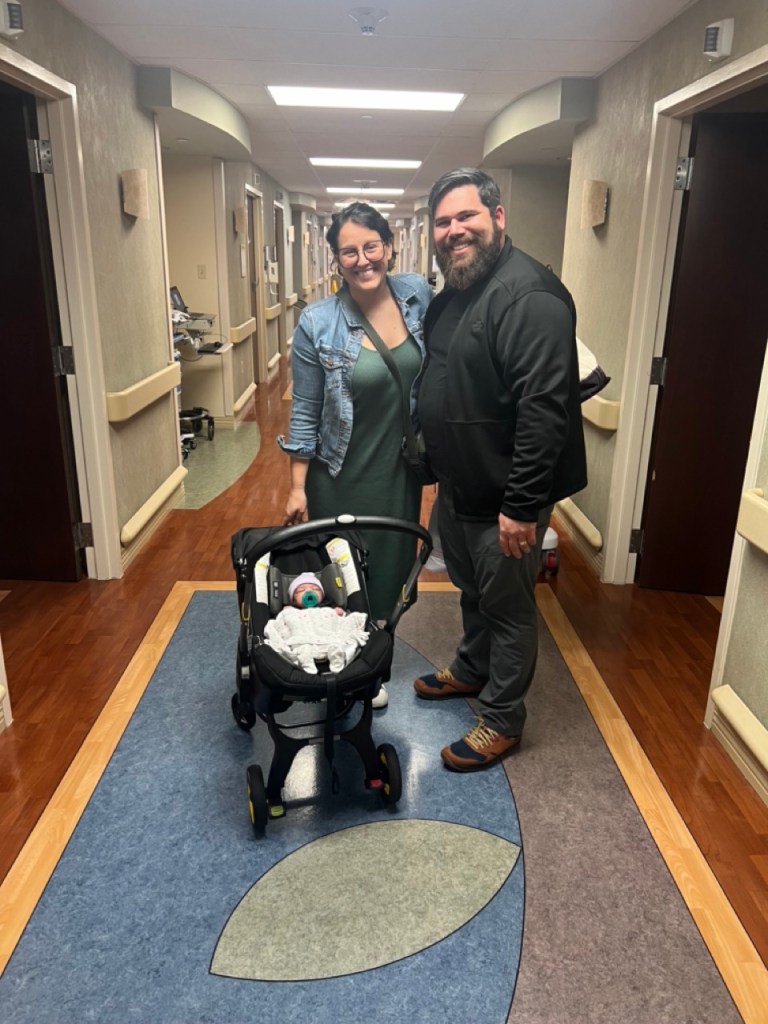
You might know already that Sarah and I came home last night with our beautiful, perfect son, Oliver Navgale Lonsdale Bledsoe. He’s perfect. We’re over the moon, and we’re overwhelmed with all of the offers of love and support. So many people have asked how they can help, and we are so grateful for our village.

You might also know that we struggled with infertility for four years before we got to the point of starting the adoption journey and then bringing Ollie home.

You might also know that we are not particularly young parents, and many of you have been praying for weeks, months, or years for us to grow our little family.

You might also know that we have the two greatest sisters in the entire world, who both recently moved out of the baby phase into the toddler and young children phase, and who have showered us with pretty much all the stuff we could ever need. Throw in the hand-me-downs from some of our wonderful friends, and we are beyond blessed with stuff.

So here’s where it gets more awkward, because I am about to ask you for money. We chose to adopt through an agency called Cradle of Life in Beaumont. They’re wonderful, and provide loving, kind, and patient support to birth parents seeking to place children for adoption. They provide support connecting with doctors, getting healthcare, food, emotional support, counseling, postpartum support, and even parenting classes for folks who chose to parent rather than place. They do this work by charging placement fees to adopting families, and we think that it is money well spent.

In addition to our payment to Cradle of Life, we had to go through and pay for the home study process, where licensed professionals evaluate our fitness to parent before the adoption as well as in the time between placement and finalization.

Because of all these things, what would be most helpful to us is a financial gift to offset these costs. We have a couple different ways for you to give, and we hope that one of them will be convenient for you and speak to you. The first one is to just Venmo us! (Here’s a link to our Venmo page, or you can just go into the app and send money to @RevNayte) This is the easiest, there aren’t any fees, and we promise we’ll treat the donation with the care it deserves.

The second is to make a donation to our Adopt Together page. Adopt together is a 501c3 that is designed to help families like ours. You make a donation to them, they take a fee for their costs, and we then turn in receipts to receive funds. If you’re more comfortable donating this way — or want your gift to be tax-deductible — this is the route for you. (Here’s the link to our page on Adopt Together)

If neither of these works for you because you’re into Zelle, because you want more info, or whatever the case may be, reach out to me and we’ll figure something else out. Also, if you’re not in a position to give, we’ll take all the prayer and love and vibes we can get. Thank you for being a part of Ollie’s village, and ours. Bonus beautiful baby content below!

Love,

Nathan and Sarah

Change the world

I went to therapy Monday. Well, that’s not right. I had a videoconference therapy session from the comfort of my couch. I’ve never been shy about the fact that I see a therapist; it’s a healthy practice for me (and a lot of people), and I’m grateful for the insights she provides into my life.

Obviously, what with the whole “society is closed” thing going on, we had plenty to talk about. Near the end of our conversation, I  was asking the kinds of questions that a lot of us are asking, but not necessarily out loud and not in public.

“What if this goes on for months?”

“How are we going to handle all of our ordinary church things?”

“What’s going to change forever?”

So there’s something you ought to know about me. I have a bit of a flair for the dramatic. So after asking all of these questions, I made a statement.

“Everything is going to change.”

“Nathan, I’ve been seeing you for a couple of years now, and you spend a lot of time talking about how things need to change, don’t you?”

Busted.

I probably don’t have to tell you that, for the last 40 years or so (and especially the last 20), the role of the church, especially the “mainline” church, has been in steep decline. Fewer people are in worship, a LOT fewer people are in worship, financial giving is down, and we simply aren’t central to many peoples’ lives. When I’m feeling particularly cynical, I compare our situation to that of shopping malls and the remaining Sears franchises: we have a lot of prime real estate, but the stuff on our shelves isn’t selling.

Which is a real shame because a relationship with Jesus and an understanding that the God who created the universe loves you is life-changing. Because having a community of people who are interested in studying scripture together can give us tremendous perspective and peace in the midst of upheaval. Because remembering we are part of something larger than ourselves can help us to engage the world meaningfully and draw hope and fulfillment from actions we take to help one another.

Churches have an incredible opportunity right now to model good behaviors, to provide love and care, and to show people that the things we talk about are much more important than a weekly worship service or regularly scheduled activities. We can show people that what we’re up to is developing the kinds of beliefs and practices that sustain people when things are hard. We can model for folks that a relationship with Jesus makes a difference, and that our concern is deepening faith and empowering people to put it to use.

A friend of a friend was a pastor in the northeast during 9/11. She talks about how, in the days following the attacks, churches were filled to the gills with people. But after a couple weeks, they walked out the doors again, remembering why the left in the first place. Because the last time they walked around Sears, they realized they didn’t really need a new ratchet set and they didn’t really want a scratchy sweater.

So I get mad when I see things like groups of church leaders suing the county so the they can do things the way they always have. I’m heartbroken when the first thing I see churches doing is figure out how they can stay within the letter of the law, but do some facsimile of what they have always done.

Our first priority needs to be, “how do we help people follow Jesus?” We do that by loving our neighbors. Historically, Christians have been the first people to open hospitals, to run healthcare ministries for the poor and hurting, to “heal the sick,” because it’s what Jesus did and told us to do. You could tell who the Christians were in ancient towns, because they wouldn’t leave during plagues, they were too busy providing care.

The faithful thing to do is to live into our faith, even when it means not being able to perform all of our faith practices the way we are accustomed to. The point of a church isn’t the activities, it’s the relationship with Jesus. So we shouldn’t be looking for ways to skirt the law when the science says stay home, we should be finding ways to help people bring faith into their homes. Saying things like “God will protect us” when we do things we don’t have to is testing God, not expressing our religious beliefs.

That’s why the church I pastor won’t be hosting drive-in church services for Easter, even if the Governor says they’re technically okay. It’s why we WILL be doing things like thinking about how we can remind people that their faith doesn’t start or end in a building. We’ll be finding ways to offer grace and connection and hope and chances to serve. We’ll be making phone calls and sending texts and devotionals out and loving our neighbors, from a safe distance.

We are not making these adjustments because we are scared, but because we are hopeful. We have an opportunity to show people that we are more motivated by our faith than our activity. We have an opportunity to look deeply into ourselves and find opportunities to change ourselves, and maybe even change the world.

It’s just a watch

For the last few weeks, I’ve been wearing my grandfathers’ watch. He died in 1990 when I was still very young, and for many years it sat in my parent’s safe. A couple years ago, when I decided I was mature enough to actually have it in my possession, I got it and wore it for a couple of days, and it promptly had a couple of parts break, and then I put off fixing it, because, well…

IMG_8611

I wasn’t sure if wearing it would send the wrong message to people. Because it was made by one of those companies that cause some people to raise an eyebrow. It took me awhile to get over that. I’m really glad that I did.

In the periods of my life where I have been the most productive, I’ve worn a watch.  What’s the magical reason I’m more productive when I’m wearing a watch? Because if I’m not wearing a watch, I check the time on this thing:

apple-apple-device-blur-cell-phone-336948

You know what I also check when I check the time on that thing? FacebookInstagramTwitterEmailTextsGamesPlanningCenterSlackWeatherSnapchatCalendarGamecams. It’s…inefficient.

But that’s really not the point. I didn’t start wearing my grandfather’s watch to avoid the time suck of my cell phone, I did it to connect with someone I love who died when I was 4. I did it so that when I look at what time it is today, I can remember someone who was looking at what time it was on this day in 1975 on the same watch. And that’s really meaningful to me, even if somebody occasionally walks away and says, “Did you see what kind of watch that preacher had on?”

Confession: I’m always going to care what people think more than I should. Some of it is innate; I’ve always been wired to seek approval and I like attention. Some of it is a professional reality; a pastor who doesn’t consider what folks think about their actions is a pastor who spends a LOT of time apologizing, and they often end up pretty lonely. I think that’s why this decision was significant enough for me that I felt like writing something about it. And, maybe I’m wrong, but I doubt only pastors are people pleasers.

That’s the other nice thing about wearing this watch so far. When I start to think judgmental thoughts about someone, I’ve got something to remind me to cut that crap out. I spent years not doing something as simple as wearing a watch because I was scared of being judged, how can I know why someone else decided to do the things they do?

Is there anything meaningful to you that you’ve avoided doing because of your fear of what other people might think? On the other hand, have you ever thought or said something judgmental to someone without knowing their story?

Wear the watch. Do the thing.

I love you and I’m sorry.

My wife is a therapist at a community heath clinic that primarily serves the LGBTQIA+ community. Many of her clients are queer kids, teenagers, and young adults. Because she’s a great professional with a lot of integrity, I don’t know peoples’ names or specifics about them, but like most people, we spend a fair amount of time talking about “how was your day” sorts of things in the evening.

I can’t tell you how many times she tells me stories of harm done to young people by their families, friends, communities, and churches because they are LGBTQIA+. Stories of suicide and self-harm attempts. Stories of deeply held shame. Stories of fractured family relationships and kids who are homeschooled because of how they’re treated when they go see people who once were their friends and people who still care about God but are no longer welcome in their churches. Stories of people with deeply held confidence that God doesn’t love them because they are trans. People who are hurting so, so badly.

I have tried to be a loving friend to and advocate for queer people throughout my ministry. To say and do things that are helpful to make a space for queer people in the church. I’ve tried to demonstrate to people faithful ways to read the Bible that aren’t “traditionalist.” And so I want to say something helpful and kind and hope-giving. But…

In most of the Bible studies I have taught and in every conversation I have had with people new to following Jesus and reading the Bible, we end up talking about, “But what do you say when it’s really bad?” They ask this because people have said things to them like “everything happens for a reason,” “God has a plan,” or “what doesn’t kill you makes you stronger.” These aren’t the right words, and they speak to a way of talking about God that places blame. So I’ll say the only thing that’s appropriate to say in situations of harm and pain:

Jesus loves you, I love you, and I’m sorry.

I am in you and you are in me

On that day you will know that I am in my Father, you are in me, and I am in you.

John 14:20 (CEB)

I had a seminary professor who had a prayer practice that always impressed me. Dr. Taussig did a lot of commuting on trains, and whenever he found himself on a commuter line or in a subway car, he would look at every person on the train with him while repeating his translation of Jesus’s words from this passage in John.

“I am in you, and you are in me, as we are in God.”

I am at the United Methodist General Conference in Saint Louis. On day one, I mostly got checked into my AirBnB, registered for a name tag, and tried to figure out how to understand everything that’s going on. It feels a little like the first time I showed up at a meeting of the Texas Annual Conference as a wide-eyed 21-year-old totally overwhelmed by what was around me, but times about 1000. I listened to a lay delegate from Liberia  and a lay delegate from Portland talking about LGBTQ people, how much they both love scripture and Jesus, and their shared deep love for the UMC.

I have been praying and fasting in preparation for this General Conference along with many of the wonderful people from St. Stephen’s in Houston for 3 weeks now. My first prayer is that the Holy Spirit would descend upon this place and surprise all of us. My second prayer has been that all of us who call ourselves United Methodist might remember that, as Jesus reminds us, we belong to him and we belong to each other.

Of the various pieces and parts of legislation in front of the General Conference, I find the One Church Plan to be the best option for our future. Like all things created by humans — especially humans in committees — it’s imperfect. But it does a couple things that I find to fit my understanding of a strong Wesleyan Christian ethic:

It trusts local churches to do ministry together. For years I’ve heard church leaders talk about how the UMC “has to keep this issue out of the local church.” I can’t understand why. People who authentically do life together over the course of years are much better prepared to disagree with love and faithfulness than people who meet infrequently for the sake of legislating. This is because people in a local church understand that they belong to each other on a deeper level. The people of St. Stephen’s have been talking about the future of our church for months now, and we represent a wide array of different opinions. But we love each other and we want to share a future together.

It privileges a united future. Many people find it impossible to see how a church can move forward without a single clear sexual ethic. However, many people also feel as if people who love and follow Jesus have lived together and faithfully followed him across broad and significant disagreement as long as people have followed Jesus. Most of Paul’s ministry was working to convince people they could, in fact, live together faithfully even when they differed wildly. Under the One Church Plan, people who want to stay deeply connected, even if they disagree, have the opportunity to do that. I find it compelling to allow the people who want to move forward together the best opportunity to do that, which is, in my opinion, the One Church Plan.

As I’m sure you know, I could be wrong. (About a lot of things, not just my preferred future for United Methodist polity.) But I also know that I’m NOT wrong in praying fervently for the Holy Spirit to descend on Saint Louis. I love the people God has connected me to through the United Methodist Church. Many of them are people who I never would have encountered anywhere else, and I’m a better Christian and human because I am in them, and they are in me. As we are in God.


–N

God is not a man

Note: Since the time I started writing this post on Thursday, it was announced that Bishop Scott Jones of the Texas Conference was the primary author of the statement released by the Council of Bishops, and also that amendment one would be reconsidered without the “controversial” passage in it that led to the harmful discussions on the floor of Annual Conference. The new wording will probably pass. But I decided to finish this thing up and post it anyway, for two reasons. First, God is not male, and that theological value is too important to ignore. Second, the harm done by our floor discussion and our broader conversations didn’t go away, and it needs to be talked about, because it should not happen anymore.

Earlier this week, I found myself transported back in time to a day that I had done a pretty god job of blocking from my memory.

The moment happened in a business session at our Texas Annual Conference meeting where we were discussing some constitutional amendments. The results of the votes, taken in every conference around the world, were announced this week. They went like this.

This was an upsetting result. The Council of Bishops offered this response.

All the female bishops issued this joint statement.

The bishop in Alabama/West Florida, one of the three Annual Conferences in the US that voted against the first amendment, issued this statement.

I serve in one of the three US conferences that voted against this amendment, one of only two conferences here in the states that voted against both amendment one and amendment two. I was in the room for our conversation about these amendments. The tone, tenor, and substance of those conversations was brutal, harmful, and way outside the bounds of our Wesleyan heritage.

Speakers insisted that God was, “A man of war,” that women are complimentary to and by that token subservient to men, that denying the maleness of God somehow discounts the personhood of Jesus as the incarnation, and a bunch of other things that stand against the long and proud Wesleyan heritage of equal footing and standing for women.

There were bizarre statements about human gender, and a lot of fear-based rhetoric about radical agendas dismantling churches. And I was just so flabbergasted and angry I didn’t have words to say. But my pain is so unbelievably unimportant to this story.

Some of the greatest blessings of my life are the relationships I have with female clergy colleagues. I could write full length blog posts about the incredible women who have led me in life, in the classroom, in my work as a clergyperson, in my faith, and in everything I do. Not passing this amendment does harm to women and girls and countless people in vulnerable positions around the world.

I watched my mentors and friends and colleagues have their identity demeaned. I watched people cry, yell, send angry all caps text messages, and question deeply how in the world we got here. My friends were under attack.

There are churches that do not welcome women in ministry. There are places that uphold complimentarian doctrines. We as the United Methodist Church are not one of them. Or at least we aren’t supposed to be.

When things are not how they should be, we can respond in several ways. We can throw up our hands and say, “well, nothing we can do about it.” We can feign moral superiority and take comfort in the fact that, “at least I don’t behave that way.” We can find someone else to blame.

Or we can do what needs to be done, and accept some of the blame, apologize, and get to work on a better future.

I am sorry I have not done more to proclaim the truth about who God is in words or in action. God is not a man, and there are human characteristics that we consider to be feminine that are part of the image of God. I will do more of this, not just on Mother’s Day, but year-round.

I am sorry that I haven’t done more in my local church to teach how unbelievably expansive God is, and how language about God matters. I will talk about the depth and richness of images of God that are masculine, feminine, and much, much more.

I am sorry that when people call me “Pastor Nathan” but they call our Pastor of Music and Worship “Miss Lindsay,” I don’t correct them. I will stop doing that.

I’m sorry I didn’t stand up on the floor of Annual conference and remind people that the United Methodist Church has distinctive doctrines and beliefs, and that they matter.

I’m sorry I haven’t put up signs in our church bathrooms to offer support and information to people suffering domestic abuse.

I’m sorry I’ve been unwilling to have conversations with people about why bible studies and curriculum and videos that reinforce female subservience have no place in United Methodist Churches.

If you’ve ever heard me preach, you’ve heard me talk about the Kingdom of God; Jesus’s incredible vision of the here AND the hereafter in the way that they ought to be. A place where life is abundant and eternal today and forever. It’s where I try my hardest to get every sermon I preach to end up. And when I preach this way, I preach hoping to stand in the shadow of Mary Magdalene, the first preacher of this Gospel following the resurrection.

Jesus said to her [Mary], “Don’t hold on to me, for I haven’t yet gone up to my Father. Go to my brothers and sisters and tell them, “I’m going up to my Father and your Father, to my God and your God.”

John 20:17 (CEB)

United Methodist Christians believe, through the doctrine of the trinity, in a God far too big and broad and incredible for any name to be complete enough. In the verse above, when the first preacher of the Gospel was commissioned by the resurrected Christ, Jesus was quick to follow the image of God as loving father with expansive language.

We look more like the image of God when women and girls are not denied their place at the table, their positions of leadership, their authority to preach or teach, or the ability to follow God’s call on their lives. Let’s get there.

I don’t know what I don’t know, you know?

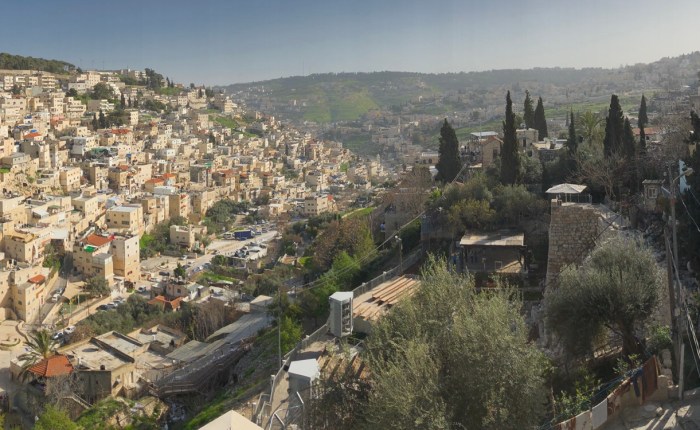
So the premise of this trip is to learn how to read the Bible geographically. So we’re going to a lot of the places that show up in the Bible, looking at maps, reading scriptures, and getting a ton of background information and history from our teacher.

And there are so many things that I didn’t know! Like, significant, changes how I think about Jesus’ ministry things that seem simple and obvious when you’re walking around here with somebody who knows things.

For example, Jesus did a huge bulk of his ministry in and around Capernaum, on the coast of Galilee. As you can see below, it’s just a terrible place to hang out, and it’s not beautiful at all:

Obviously I’m kidding. It’s a beautiful place. And a huge portion of Jesus’s ministry happened within a days walk of here! Who knew? Well, for starters, I felt like I should have…

So….where else in my life could that be true? Where in your life could it be true?

So here’s some great news: We can all, always, keep learning! We can have our eyes opened, find new information that excites us and has the possibility to change how we think about or do almost anything.

I’m praying to stay open to a God who speaks in words, in places, in maps, and in ways beyond comprehension. Will you pray that way, too?

Reflection from the Holy Land (and the deer lease)

Reflection from the Holy Land (and the deer lease)

I am on an immersive learning trip in the Holy Land! As we tour Israel with a group of 32 pastors, spouses, and church professionals, I am going to do my best to check in here as often as I can with reflections on our time together.

Today was a great first full day in Israel! We spent our morning framing a lot of the learning we’ll be doing for the next 2 weeks.

Our instructor for the trip is a man named Jack Beck, who calls his academic project “biblical geography.” A story he told to illustrate part of what biblical geography means for reading was really interesting to me, and reminded me of a story about my own life that I think can help to describe the sort of learning we’ll be doing here.

Many of my friends and church members and other folks know that I am an avid deer hunter. It’s my favorite hobby, and I spend a lot of time and energy on it.

In order to get around on a piece of hunting property, or to mark distances from blinds to make sure you’re making good and ethical shots, lots of hunters will use red sticks as a marker. They look like this:

(image from HomeDepot.com)

If I saw one of these things, I always knew I was looking at a marking stick, but didn’t know much more about it.

So a few years ago I was in the Boston area in the late winter time, after most of the snow had melted but before people had “de-winterized.” If you’re from somewhere cold, you already know where this is going; I saw a bunch of deer lease road marking sticks! Only…they were doing what they’re actually designed to do, and marking the curbs and edges of roads to keep snow plows out of peoples’ yards. Because you see, these sticks are, to most people in most places, snow plow sticks.

At that time, some Pharisees approached Jesus and said, “Go! Get away from here, because Herod wants to kill you.” Jesus said to them, “Go, tell that fox, ‘Look, I’m throwing out demons and healing people today and tomorrow, and on the third day I will complete my work.

–Luke 13:31-32 (CEB)

If you read many of the commentaries on this text, they’ll talk about the layers to this statement by Jesus in which he compares Herod Antipas to a fox. They’ll dive into the understanding of foxes as tricksters widely held throughout Europe and in classical thought. Could Jesus have meant to inspire that comparison? Certainly. But wouldn’t it be more likely that, as a guy living in first-century Palestine, Jesus was talking about the local foxes that he and his audience were familiar with? The kind that, while still a predator, doesn’t inspire the sort of fear that wolves or tigers or hyenas or lions or the other bigger and stronger indigenous predators did?

Dr. Beck’s passion, and what he is trying to help all of us to see, is that place matters profoundly to the biblical stories. The other things that happened on a mountain, or the reason for a city to be here and not there, or connotations and reputations of towns or places tell us something about the text, and they tell us something about God, too.

I’m so excited to learn more about this new way of reading the Bible, and sharing it with you!

Paz,

Nathan